STROLAR® GROUND SCREWS

About Strolar Ground Screws

Learn about ground screw foundations, engineering approach, materials, quality and project support.

HomeAbout Strolar Ground Screws
/ ABOUT STROLAR GROUNDSCREW

Building stronger foundations for solar.

Strolar Groundscrew Pvt. Ltd. focuses on ground screw foundation systems and renewable energy foundation solutions, bringing together ground-foundation thinking and solar project requirements.

Our approach is project-led: understand the application, assess the relevant site and structural conditions, select a suitable foundation concept, and support the installation process. The objective is simple—make the foundation stage more efficient without compromising engineering discipline.

Ground screw expertise
Solar industry understanding
Project-specific solutions
Engineering-focused support
/ GROUND SCREW KNOWLEDGE HUB

Everything you need to know about ground screw foundations.

From how a ground screw works to where it can be used, this guide turns foundation technology into practical information for homeowners, EPCs, developers, engineers, contractors and project teams.

HOW IT WORKS

Drive. Verify. Build.

A ground screw transfers structural forces into the surrounding ground through its shaft and helical elements. The exact screw configuration and installation criteria should be selected for the project.

01PositionMark the designed foundation point.
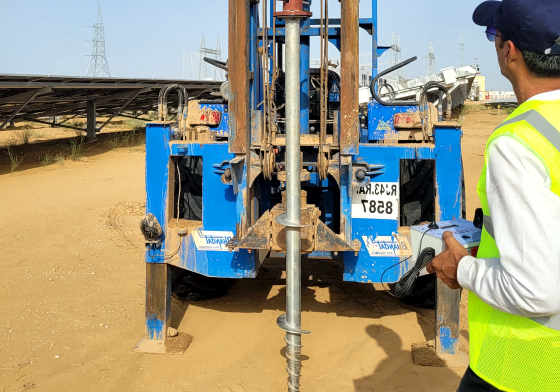
02DriveInstall using suitable equipment.
03VerifyCheck torque, alignment and project criteria.
04BuildConnect the structure to the foundation.
Ground screw installation with drilling machine
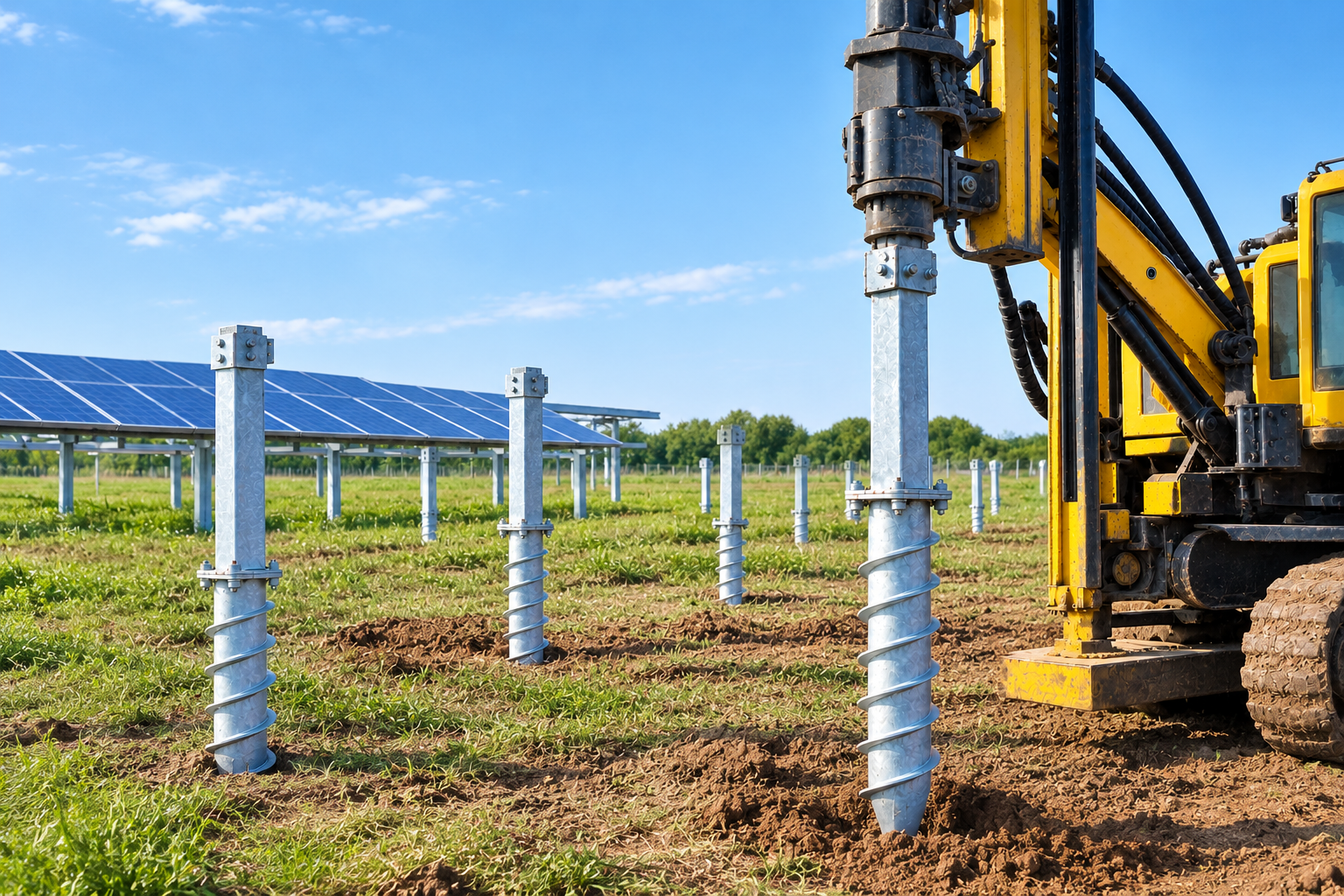
Strolar Ground Screw for Solar
GROUND SCREWS FOR SOLAR

Solar foundations without the traditional concrete workflow.

Ground screws can provide foundation points for suitable ground-mounted solar structures. A project assessment typically considers the site, soil, solar layout, structural loads, screw position, installation method and verification requirements.

Fast installationLess excavationReduced concrete dependencyImmediate foundation availability*Project-specific selectionPotential removability
*Subject to system design, installation and project requirements.
SiteMarkInstallVerifyMount
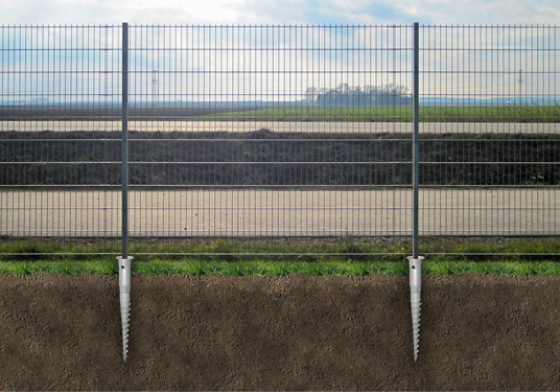
Ground Screw Fencing
GROUND SCREWS FOR FENCING

A practical foundation option for permanent and temporary fencing.

Ground screws can be paired with suitable fencing systems for industrial perimeters, construction sites, mesh or chain-link enclosures, garden boundaries, safety fences and gates. Their smaller installation footprint can be useful where excavation needs to be limited.

Fast installationSuitable for sloped sites*Easy post replacementLess excavationTemporary fencingReduced concrete dependency
*Suitability depends on terrain, loads, soil and the selected foundation system.
Temporary Ground Screw Structure
TEMPORARY STRUCTURES

Build quickly when the foundation also needs to move with the project.

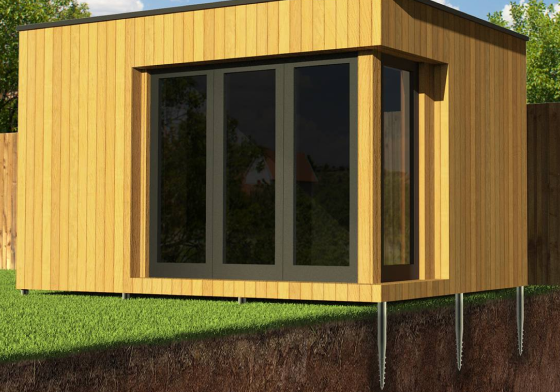
For suitable temporary applications such as event structures, cabins, walkways and lightweight structures, ground screws can reduce installation steps and may allow removal and reuse. Final capacity and stability must be established for the actual structure and site.

Quick installationNo concrete curingPotential reuseFlexible positioningReduced labourVaried terrain*
*Not every soil or structure is suitable; engineering assessment remains essential.
Temporary Ground Screw Structure
DOMESTIC INSTALLATION

Ground screw foundations for homes, gardens and light structures.

Domestic applications can include suitable decks, garden structures, fencing, small outdoor structures and other light construction uses. Professional installation can include site assessment and quality checks appropriate to the application.

Minimal ground disturbanceQuick installationClean constructionEasy accessSuitable for selected light structuresProject-led assessment
Domestic suitability depends on structure, loads, soil and local requirements.
THE BASICS
01

What is a ground screw?

A steel foundation element with a helical section that is installed into the ground to create an anchoring point for a suitable structure.

02

How does it work?

The installed shaft and helical elements interact with the surrounding ground to transfer structural forces. Design depends on soil and loading.

03

How is it selected?

Application, soil conditions, structural loads, corrosion environment, geometry and installation requirements all influence selection.

Pull-outChecks resistance to uplift forces.
LateralChecks resistance to horizontal forces.
CompressionChecks response to downward loading.
Torque & AlignmentInstallation verification for the selected system.
/ TESTING, SOIL & QUALITY ASSURANCE

Installation is only one part of the foundation.

Ground screw performance depends on the interaction between the product, installation and ground. Quality assurance should therefore continue from design through execution.

Pull-Out TestEvaluates resistance to uplift forces.
Lateral TestMeasures response to horizontal loading.
Compression TestAssesses response to downward load.
Torque VerificationChecks installation resistance against project criteria.
Position & AlignmentConfirms installed foundation location and orientation.
GPS / Site RecordsDigital location records can support installation traceability.
01

Soil

Profile, density, fill, clay, sand, rock and moisture conditions can affect selection.

02

Terrain

Slope, access, drainage and site logistics can influence installation.

03

Environment

Corrosion exposure, weather and project life influence material and protection choices.

04

Structure

Wind, seismic, compression, uplift, lateral loads and connection geometry matter.